TL;DR
- Real followers come from being shown to strangers who like what they see. In 2026 that showing is done by Instagram's recommendations, which Adam Mosseri says are driven mainly by watch time, likes and sends, so the work is making posts people finish, like and forward to a friend.
- The tools that matter right now: Trial Reels to test ideas on non-followers, original content (Instagram now strips recommendation eligibility from accounts that mostly repost), collab posts, and captions written for search, since public professional accounts can show up in Google.
- Anything sold as "real followers" breaks Meta's spam policy, and in the US the FTC has banned knowingly buying fake follower counts for commercial use since October 2024. The paid options that are allowed are ads and disclosed creator partnerships.
Facts in this guide were checked in November 2026.
Here is the short answer to how to get real Instagram followers: you earn them by being shown to people who do not know you yet, and by giving them a reason to stay. In 2026 Instagram decides who sees what, so in practice the job is to make posts that strangers watch to the end, like and send to a friend, and to post them often enough that the system has something to test. Everything else, from your bio to your hashtags, either helps that process or gets in its way.
That answer sounds obvious, and every guide on the first page of Google says some version of it. What most of them skip is why it works, which levers are new this year, and what the word "real" is doing in the search box. It matters, because "real" is also the word a whole industry uses to sell you the opposite. This guide covers the mechanism first, then a 30-day plan, then a frank comparison of every option people search for, including the paid ones.
Before writing it we did a few things ourselves. We ran the query through Google's autocomplete this week to see what people actually type next ("fast," "free," "and likes," "buy," "reddit," "app," "check"). We read Meta's spam policy and the text of the US Federal Trade Commission rule on fake social media indicators in full. We read Instagram's own announcements on ranking, originality and Trial Reels. And we read the current page of one follower brand that ranks for this query, which turned out to say something we did not expect. We did not run a test account for this piece, and nothing below claims we did.
What a real Instagram follower is, and what sellers mean by real
A real follower is a person who chose to follow you because of something you posted, and who would notice if you stopped. That definition has two parts, and both matter. The account has to belong to a human being, and the follow has to reflect that human's actual interest.
Follower sellers have spent years blurring the second part. Their pitch moved from "cheap followers" to "high quality followers" to "real followers," meaning accounts with profile photos, posts and some history, sometimes run by people who are paid or rewarded to follow. Those accounts can be human. The interest is not. Someone paid a few cents to follow a bakery in another country is a real person and a fake fan at the same time.
The clearest statement of that distinction we found came from an unexpected place. Stormlikes, a brand whose sponsored article on getting real followers still appears among the top search results for this query, now says on its own buy-followers page (we read it on November 19, 2026) that it "publishes research and does not sell engagement." The page goes on: "A genuine follower represents a person's actual choice to follow. A provider's real-account label is not enough to establish that choice." It adds that "a replacement promise does not establish source quality or prevent future removals." When a page with that address concedes the point, the argument is mostly over.
The law draws the same line. The FTC's rule on consumer reviews and testimonials, in force since October 21, 2024, defines fake indicators of social media influence to include those generated by bots, by accounts not tied to a real individual, by accounts made with a real person's details without consent, by hijacked accounts, or that "otherwise do not reflect a real individual's or entity's activities, opinions, findings, or experiences." Followers, views, likes, saves and shares are all named as indicators. The definition reaches well past obvious bots.
So "genuine" and "authentic" Instagram followers, the two other phrasings people search for, mean the same thing as "real" here: a person who followed on purpose. That is the only kind this guide is about.
A human account is not the same thing as a human choice, and only the choice is worth anything to you.
How Instagram decides who gets to see you
Start with the literal mechanism. When you post, Instagram shows the post to some of your followers in Feed, Stories and Reels, and, separately, decides whether to recommend it to people who do not follow you, in Explore, the Reels tab and suggested posts. Followers come almost entirely from that second route. Nobody can follow you if they have never seen you.
Instagram changed how that second route works in April 2024. TechCrunch reported at the time that the company had begun to rank recommendations by showing new content to a small audience first and widening the audience only for posts that performed well, with the stated aim of giving every creator "an equal chance of finding audiences," not just big accounts. The same update made Instagram replace reposted copies with the original in recommendations, and drop accounts that mostly repost other people's work from recommendations altogether.
In January 2025 Mosseri described what "performed well" means. In a video summarized by Social Media Today on January 22, 2025, he said: "The top three signals that matter most for ranking are watch time, likes and sends." He told creators to watch three numbers in their Insights, average watch time, likes per reach and sends per reach, and added a detail that matters a lot for growth: "Likes are slightly more important for connected content, and sends are slightly more important for unconnected content." Connected content is what your followers see. Unconnected content is what strangers see. In other words, the signal most tied to reaching new people is whether viewers forward your post to someone else in a direct message.
Notice the shape of those metrics. They are rates, not totals. Likes per reach, sends per reach. Instagram is not asking how many people follow you. It is asking what share of the people who saw a post did something with it.
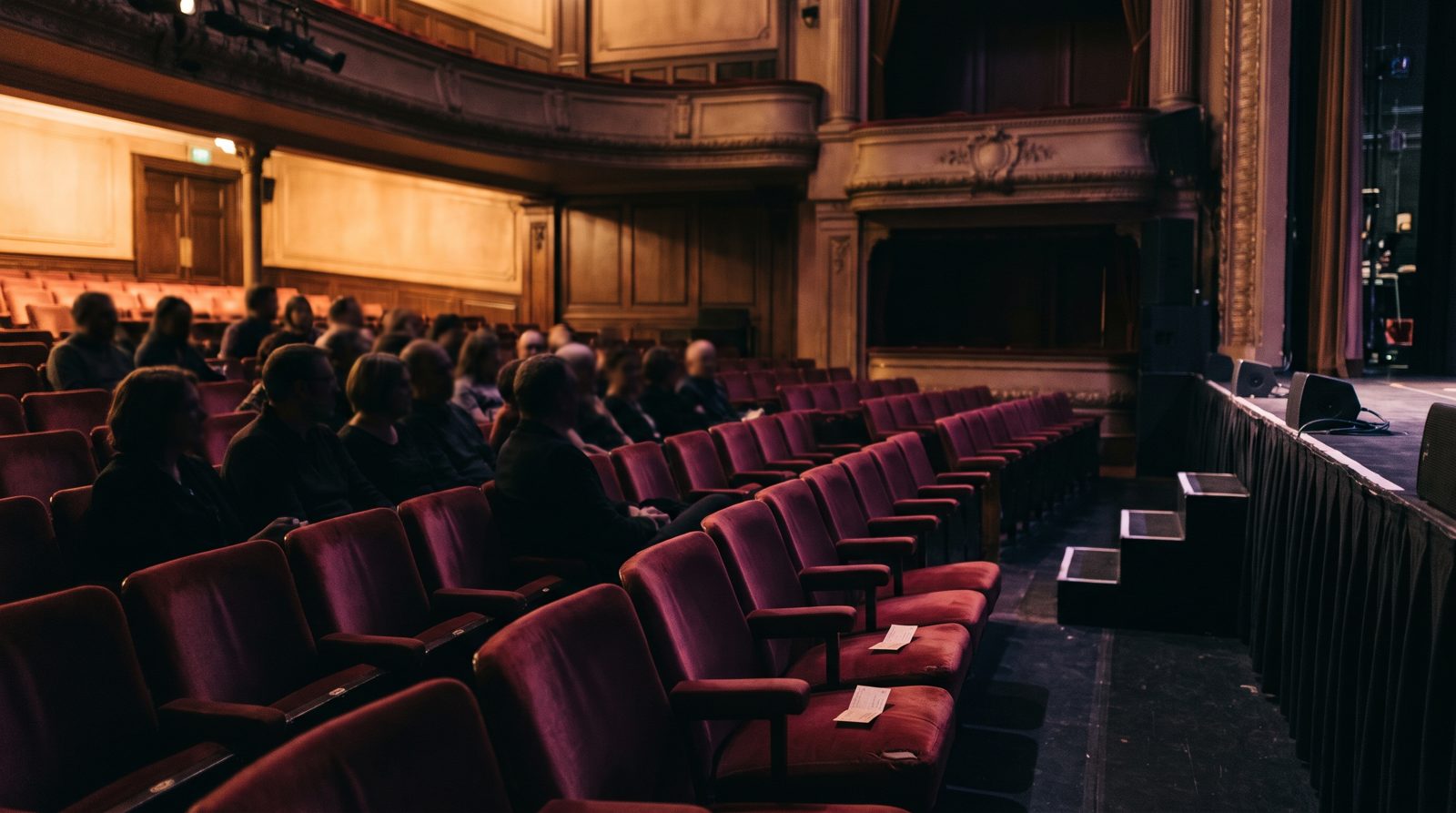
Here is the image to keep for the rest of this guide. Theater managers have an old term, papering the house, for handing out free tickets so a thin audience looks like a full one. A papered house photographs well from the back of the hall. But the seat-fillers do not laugh in the right places, do not buy anything at the bar, and do not tell their friends to come tomorrow, and the people who run the theater know exactly which seats were paid for. Instagram is the theater manager in this picture. It counts reactions per seat, not seats.
The comparison is useful, but it undersells one thing. A papered theater can still fool the paying audience in the room. On Instagram, the follower count on your profile can fool a visitor for a few seconds, but the reactions that decide your reach are counted by a system that sees every seat, every night.
The originality rule tightened again this year. On April 30, 2026, Instagram's creators blog announced that "the same protections we introduced to reels in 2024 will now apply to photos and carousels," so accounts that mainly re-upload others' photos and carousels are no longer eligible for recommendations. An account can regain eligibility once enough of its posts over a rolling 30-day period count as original, and the status shows in Account Status in settings, where it can be appealed. Instagram defines original as "work that you wholly created or reflects your unique perspective," and says that adding a border, a watermark, subtitles or a credit in the caption does not make someone else's post yours. The same post said 75% of recommendations in the US now come from original posts. We cover the related copy-detection tools in our piece on how Instagram flags copies of your Reels.
Viewers now have more say too. Instagram's Your Algorithm controls let people see and edit the topics their recommendations are built on, which we explained in what Meta's Your Algorithm explainer actually says. For a creator, the practical consequence is that a clear, consistent topic makes you easier to place in someone's chosen interests. For the rest of this year's ranking changes, our running summary of everything that changed in the Instagram algorithm in 2026 keeps the timeline.
The turn: the follower who hurts most is the human one
The usual case against buying followers is that bots are fake and Instagram will catch them. That is true as far as it goes. Instagram has been deleting inauthentic follows since at least November 19, 2018, when it announced it had "built machine learning tools to help identify accounts that use these services" and would remove "inauthentic likes, follows and comments from accounts that use third-party apps to boost their popularity." But the bot story misses where the real damage happens.
Think about the two kinds of bought follower separately. A pure bot account that never opens the app is close to inert. It inflates a number on your profile, it may be deleted in the next sweep, and it lies to you and to anyone who looks at your count. Instagram has not published how it handles followers who never log in, so we cannot say whether such accounts touch your ranking at all, and we would rather say so than guess.
The "real" bought follower is different. That person, paid or rewarded to follow you, does open the app. Instagram, doing its job, shows them your posts as connected content. They scroll past, because they never cared about your topic. Each time that happens, your likes per reach and your watch time among followers take a small hit, which are the exact rates Mosseri says the system reads. Our reasoning here is an inference from how Instagram describes its signals, not a figure Instagram has confirmed. But it follows directly from the mechanism, and it flips the usual advice on its head.
The better the fake follower looks, the more it costs you, because a convincing fake is one Instagram will actually show your posts to.
That is also why the sellers' move up-market, from bots to "real accounts," has never solved the buyer's problem. It solved the seller's problem: real-looking accounts survive purges longer. For the buyer, they swapped a harmless lie for a harmful one.
Pocket glossary: the numbers that tell you whether followers are real
- Views. Instagram's headline metric in Insights. It counts every time your content is seen, including repeat views by the same person, so it runs higher than reach.
- Reach (accounts reached). The number of unique accounts that saw your content at least once.
- Followers and non-followers. Insights splits views and reach by whether the viewer follows you. The non-follower share is your discovery number: it tells you whether recommendations are carrying the post.
- Likes per reach and sends per reach. Where Insights does not show them as ready-made figures, they are easy to work out from a post's numbers: divide likes, or shares by direct message, by accounts reached. These are the rates Mosseri points creators to.
- Average watch time. For Reels, how long people actually stayed. A Reel people leave in the first seconds rarely gets widened.
- Account Status. In settings. Shows whether your account and content are eligible to be recommended, and lets you appeal.
- Trial Reels. A posting option that shows a Reel to non-followers first, so you can test an idea without your existing audience seeing a miss.
If any of these terms are new, our guide to reading Instagram analytics walks through where each one lives in the app. And if you want the bigger fight over what a "view" should even mean, the ad industry is having it right now, as we reported in the push for one definition of a view.
How to get real Instagram followers: a 30-day plan
This plan is built only from levers Instagram has publicly described. It assumes you have a professional (creator or business) account, which you need for Trial Reels and full Insights, and which is free to switch to in settings.
- Day 1: check Account Status. Before you make anything new, open Account Status in settings and confirm your account is eligible to be recommended. If an earlier habit of reposting has made it ineligible, the April 2026 rule means you need a run of original posts over a rolling 30 days before recommendations come back. Nothing else in this plan works while that switch is off.
- Days 1 to 3: decide what you are for. Write one sentence a stranger could repeat: who you help or entertain, and with what. Then make your name field, bio and first nine grid posts say the same thing. A visitor who arrives from a recommended Reel decides in seconds whether there is more of what they just saw.
- Days 3 to 7: plan a repeatable series. Pick two or three formats you can make every week, such as a weekly teardown, a recurring tip, or a before-and-after. Series make following rational: the viewer knows what they will get next. Our Instagram content calendar guide has a planning template.
- Week 2: test ideas with Trial Reels. Instagram launched Trial Reels on December 10, 2024. You switch on the Trial toggle before posting, and the Reel goes to non-followers first and stays off your grid. Instagram's creators blog says you get early insights after about 24 hours, and you can opt in to automatic sharing with your followers if the trial does well in its first 72 hours. In June 2025, Social Media Today reported Instagram's own finding that 40% of creators who tried Trial Reels started posting Reels more often, and 80% of those saw more reach from non-followers. Instagram did not publish a control group, so read that as encouraging rather than proof.
- Week 2 onward: design every post to be sent. Since sends weigh most for reaching strangers, ask of each idea: who would someone forward this to, and why? Useful checklists, jokes about a specific shared experience and strong opinions in a niche get sent. Generic motivation rarely does. Carousels and Reels both work; finish rate matters for Reels, so cut the windup and put the payoff early.
- Week 3: write captions for search, not for hashtags. Since July 10, 2025, public posts from professional accounts run by adults can be indexed by search engines such as Google, a change reported by PPC Land and others. Instagram also began capping hashtags at five per post and Reel in December 2025, according to Social Media Today and Business Today. So name the subject in plain words in the first line of the caption, and use a few precise hashtags rather than many broad ones. We cover the details in our hashtag strategy guide and in how to write Instagram captions.
- Week 3: borrow audiences honestly with collab posts. A collab post appears on every co-author's profile and in their followers' feeds, with shared likes and comments. Scheduling tools such as Sked Social and Pallyy list the current limit as five invited collaborators. Pick partners whose audience overlaps your topic but not your exact offer, and make something neither of you could make alone.
- Every day: answer people. Reply to comments in the first hour and to direct messages. It is not a ranking hack so much as the point: real followers are relationships, and a reply is often what turns a viewer into one. If live video scares you, our piece on why most would-be creators never press Go Live is worth a read.
- Every week: read three numbers. Non-follower share of views, sends per reach, and follows from each post. Double down on whatever earned follows, not on whatever earned the most views. Those are not always the same post.
- Day 30: cut and repeat. Drop the format that brought views but no follows. Keep the one that brought follows. Start the next 30 days with one new test.
For more tactics in the same spirit, our list of ways to get more Instagram engagement goes deeper on replies, prompts and Stories.
Getting real Instagram followers fast: what fast can honestly mean
Fast, for real followers, means one post that travels. It does not mean a steady daily drip you can order. Because Instagram widens the audience only for posts that do well with a small first group, growth tends to come in steps: long flat stretches, then a jump when one post gets carried. The fastest honest route is therefore volume of good tests, which is what Trial Reels are for, not volume of posts on the main grid. No one has published reliable data on how long it takes an average account to reach any given follower count, and we would distrust anyone who quotes one.
Real Instagram followers and likes: why likes come first
Likes and real followers are not two separate goals. Likes from the people who already follow you feed connected reach, which keeps your existing audience seeing you. Sends from strangers feed unconnected reach, which is where new followers come from. So the order is: earn reactions, then follows. Real Instagram likes come the same way as real followers, from a post worth reacting to. Since 2021, users have been able to hide like counts on their own posts, which is a good reminder that the count on screen was never the point. The rate behind it is.
How to get real Instagram followers free
Everything in the 30-day plan costs nothing but time. Trial Reels, collab posts, Account Status, Insights, captions and search indexing are all free features. What "free followers" offers usually involve is something else: apps that ask for your password, or exchanges where you follow strangers in return for their follow. Instagram's 2018 announcement asked people who had shared their login with such apps to change their password, and Meta's spam policy covers coordinated follow exchanges. Free in money is often expensive in account risk.
Paying for real followers: every option compared
This is the section most guides avoid, because the honest answer is uncomfortable for sellers. You cannot buy a real follower, by the definition above, because a purchased follow is not a choice. You can buy attention: you pay to put your best post in front of people, and some of them choose to follow. Those are different transactions, and only the second is allowed.
Meta's spam policy, which covers Instagram, prohibits "attempting to or successfully selling, buying, or exchanging for engagement, such as likes, shares, views, follows, clicks," and "offering to provide anything of monetary value in exchange for engagement." Its inauthentic behavior policy separately bans using fake or inauthentic accounts to build an audience. Here is how the options people search for stack up against those rules.
| Option | What you pay | Allowed by Meta's rules | Who ends up following you | Main risk |
|---|---|---|---|---|
| Original posts and Reels | Time | Yes | People who chose you | Slow, uneven growth |
| Trial Reels | Time | Yes | Strangers who liked a test | Trials can get less reach than normal posts |
| Collab posts | Time, sometimes a fee | Yes | Your partner's audience, by choice | A poor topic match brings followers who leave |
| Boosted posts and Meta ads | A budget you set | Yes | People who saw a labeled ad and chose to follow | Can buy cheap profile visits from the wrong audience if targeting is loose |
| Paid creator shoutout or sponsorship | A fee to the creator | Yes, with clear disclosure | That creator's fans, by choice | Must be disclosed as a paid partnership |
| Follower packages sold as "real" | Per thousand followers | No (spam policy) | Bots or paid accounts with no interest | Removal, weaker rates, FTC exposure if used commercially in the US |
| Follow-for-follow and engagement groups | Time | No when coordinated or rewarded | Other growth-seekers | An audience that is not interested in your topic |
| Growth apps that ask for your password | A subscription | No | Whoever the app's automation reaches | Account takeover, removal of the activity |
If you have a budget, the legitimate way to spend it is in the ads row. Boosting a post from the app lets you choose a goal such as more profile visits, and the people who then follow you saw an ad clearly labeled as one and decided for themselves. That is paying for distribution, not for followers, and it is the honest answer to "how to buy real Instagram followers." Our comparison of organic and paid Instagram growth tools covers how to judge third-party services before you hand any of them your login.
You can buy a seat in front of the audience. You cannot buy the applause.
A short history of the follower trade
The modern case against bought followers was built in courtrooms, not in marketing blogs. In January 2018, a New York Times investigation called "The Follower Factory" exposed Devumi, a company that sold followers and engagement across social platforms, many of them from accounts that copied real people's names and photos. On January 30, 2019, the New York Attorney General announced a settlement with Devumi and related companies that the office called the first finding by a law enforcement agency that selling fake followers and likes is illegal deception, and that fake activity using stolen identities is illegal impersonation. The office said Devumi had taken in about $15 million between 2015 and 2017.
The FTC followed in October 2019 with its own case against Devumi and its owner, German Calas Jr., alleging the company had filled more than 58,000 orders for fake Twitter followers, plus YouTube subscribers and views. The order imposed a $2.5 million judgment, all but $250,000 of it suspended because of his finances, and banned both from selling social media influence. Notice who was pursued in those cases: the seller. Nothing in them addressed the buyers.
That changed with the FTC's rule in August 2024. Section 465.8 makes it an unfair or deceptive practice both to sell and to buy fake indicators of social media influence, where the person knew or should have known they were fake and they could be used to misrepresent influence or importance for a commercial purpose. The rule took effect on October 21, 2024, and violations can bring civil penalties. Read the knowledge test closely and it separates two people: a brand that unknowingly hires an influencer with fake followers is in a very different position from the influencer who bought them.
The platform kept sweeping in the meantime. In early May 2026, users around the world reported sudden overnight drops in their follower counts, from a few hundred on small accounts to very large numbers on celebrity ones. New Zealand's Rova reported on May 7 that Instagram had not officially commented on what looked like a clean-out of spam and bot accounts, and other outlets carried claims and counterclaims about what Meta had said. What is clear is that a count padded with inauthentic accounts can shrink on a day you do not choose.
Read in order, these events show the risk moving from the seller to the buyer. In 2019 the law chased the factories. By 2024 it named the customers too, at least those using the numbers to do business.
The one public test we could find, and its limits
Rigorous public experiments on this question are rare, and we found none that met an academic standard. The most cited is a 2019 test published on the AdEspresso blog, written by the agency Animalz, which ran a new Instagram account tied to a small online shop through two periods. From July 2 to August 13 the account grew organically; from November 23 to December 19 it used Boostgram, an automation service that followed and unfollowed accounts on the shop's behalf, which the article said cost "$99 and up" a month.
The organic period gained 401 followers, about 9.3 a day. The automation period gained 111, about 4.1 a day. Daily likes ran above 200 in the organic period and below 100 with the bot, comments fell from about 10 a day to about 4, shop visits fell from 15 to 20 a day to 5 to 10, and the bot period produced no sales at all while the organic one produced steady ones.
The caveats are large, and they are worth saying plainly. This is one account, run by a marketing software company's blog, in different seasons of the year, testing automation rather than purchased followers, seven years ago. It proves nothing on its own. What it does is show the mechanism in miniature: activity that is not driven by interest fails to produce the outcomes interest produces. We would rather show you one honest small test with its limits than a confident statistic with no source behind it.
Checking whether your real Instagram followers count is real
"Real Instagram followers count" is one of the phrases people type, and it usually comes from one of two worries: is my own count honest, or is someone else's? Both can be checked without any third-party tool.
For your own account, Instagram's Help Center says follower insights, including growth, top locations, age ranges and the hours your followers are most active, appear once you have at least 100 followers. Three things are worth looking at. First, sudden spikes in follower growth that do not match a post that took off. Second, top locations that make no sense for your language or market. Third, a widening gap between your follower count and the number of followers who actually view your posts, which Insights shows when it splits views and reach into followers and non-followers. If the follower share of your views keeps falling while the count rises, the new arrivals are not watching.
For someone else's account, say a creator you are thinking of paying, the public signals are weaker but still useful. Look at comments rather than likes: generic praise, emoji strings and comments that would fit any post are a warning sign. Look at the ratio of views on recent Reels to the follower count over several posts, not one. And ask for screenshots of their Insights, including the follower and non-follower split. A creator with a real audience usually has no problem sharing them. The analytics guide linked earlier shows where each number lives.
If you find fake followers on your own account, from an old purchase or simply from spam accounts that found you, you can remove followers one by one from your follower list. Expect your count to drop and your rates to look healthier. That trade is worth making.
What we know, and what we don't
Instagram has named its top three ranking signals and said which ones matter more for followers and for strangers, but it has never published weights, thresholds or a formula. Anyone who tells you that sends count exactly so many times more than likes is guessing. The 75% figure for original posts in recommendations is Instagram's own and applies to the US. The Trial Reels figures are also Instagram's and come without a comparison group.
We do not know how Instagram treats inactive or fake followers in ranking, so our argument that convincing fakes cost more than obvious bots is reasoning from the published signals, not a confirmed fact. We do not know the true scale of the May 2026 follower drops, because Instagram did not publish one. And we could not find reliable data on how long organic growth takes for a typical account, which is why this guide gives you a 30-day process instead of a promised number.
The weakest evidence in this piece is the AdEspresso test, and we have said so.
Who should not chase follower growth at all
Not everyone who types this query needs more followers, and saying so is part of giving an honest answer.
- Local businesses that sell to a few streets. A café needs the right 2,000 people nearby, not 50,000 strangers. Location tags, local collabs and replies to every message beat a growth plan.
- Anyone trying to qualify for a brand deal or a program threshold. If the number is the goal, buying is tempting. It is also exactly the commercial misrepresentation the FTC rule describes, and brands increasingly ask for Insights screenshots.
- People who need a portfolio, not an audience. Photographers, designers and freelancers often win work from a tidy grid and a clear link in their bio, regardless of follower count.
- Anyone who would have to post things they do not believe in to grow. Real followers follow a real person. If the plan requires becoming someone else, the followers you get will be following a costume.
Fill the house with people who bought a ticket
The papered house is a tempting picture because it promises a shortcut past the hardest part of making anything, the long stretch where almost nobody is watching. But the theater was never the problem. The empty seats were information. They told you which shows people wanted to see.
Instagram in 2026 is set up to give you that information quickly, if you let it. Trial Reels tell you which ideas strangers respond to. Insights tell you whether the people you reached cared. Account Status tells you whether you are even in the running. A bought follower corrupts all three readings at once, and the better the fake, the worse the corruption.
So the question to ask of any growth tactic is not how many followers it adds. It is whether every new seat it fills belongs to someone who would buy a ticket to the next show. If it does, the count will take care of itself. If it does not, the count was never yours.
FAQ
How can I get real Instagram followers fast?
Run more tests, not more purchases. Use Trial Reels to show new ideas to non-followers, keep the ones that earn sends and follows, and post those to your main grid. Growth usually arrives in jumps when one post gets widely recommended, so a faster pace of good experiments is the only honest speed-up available.
How do I get real Instagram followers for free?
Everything that works is already free: a professional account, Trial Reels, collab posts, Insights, Account Status and search-friendly captions. Be wary of free follower apps. Many ask for your password or join you to follow exchanges, which Meta's spam policy prohibits and which bring followers with no interest in your topic.
Can you buy real Instagram followers?
No. A follow you paid for is not a choice, and Meta's spam policy bans buying follows, likes and views. In the US, the FTC also bans knowingly buying fake follower counts for commercial use. You can legitimately pay for reach through boosted posts, ads or disclosed creator partnerships, and let people decide whether to follow.
How do I check if my Instagram followers are real?
Open Insights and compare follower growth with your posts, check that top locations fit your audience, and watch the share of your views that comes from followers. If your count rises while followers watch less and less, the new arrivals are probably not real. Remove obvious spam accounts and expect healthier rates afterward.
Is Reddit advice about real Instagram followers reliable?
Treat it as anecdotes. A Reddit thread is one person's account, often with a different niche, country and timing from yours, and some threads are quiet promotions for follower services. Useful threads describe what was posted and what the Insights showed. Ignore any post that names a service and promises a number.